
Europe: when money talks, the U.S. will walk to India and Southeast Asia
by A. Altieri D’Angelo
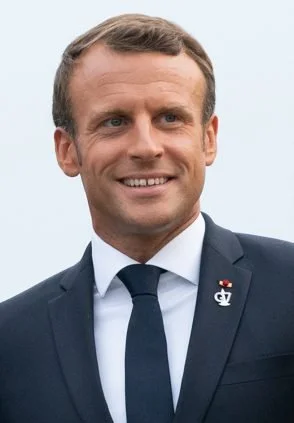
Photo: Emmanuel Macron
Americans are beginning to wonder about the loyalty of their Western European friends. The consequences of such doubts taking root in the U.S. are not good for Europe. Negative U.S. public opinion could lead to Europe defending itself and America focusing on building a stronger alliance with India and countries in Southeast Asia (SE Asia).
(Such a shift in policy would take years to implement, but its effects would be felt sooner rather than later).
The problem is Europe’s misguided China policy; it is trying to keep the U.S. as a critical ally and, at the same time, increase its Chinese market share. France and Germany, in particular, are sending signals that they want to enhance their relationship with China in defiance of U.S. policy.
The leaders of both countries have visited China to urge it to follow the rules and force Russia to stop the war and withdraw its forces. But they also brought several dozen business executives who solicited more Chinese business. A perfect example is when Airbus announced that it is expanding its operations and market share in China. Airbus knows that the Biden Administration is urging all democratic countries to join the U.S. in containing China's coercive expansion, but "money talks."
German business executives are also reluctant to leave the Chinese market as they see it as economically crucial to growth and a hedge against working in a high-cost European market. They know their efforts contradict U.S. policy to counter China but hope to avoid problems with America.
And to add insult to injury, Emmanuel Macron gave China a propaganda victory. He proclaimed that France and China seek a multipolar world which is code for reducing the influence of the U.S. He, as has been written, even stated that Taiwan was not a European issue.
Since the beginning of the 20th Century, America has made many tactical mistakes in foreign policy (Vietnam, the 2nd Iraq War, and Afghanistan, to name a few). Still, it also succeeded in creating a world order governed by democratic principles, leading to a mostly peaceful and prosperous world. The U.S. fought two European land wars and the Cold War to defend freedom, not seek territorial gain. It is still fighting for freedom by being Ukraine's most significant military and economic aid donor. And despite its history and current support, major European countries are sending signals to China that they are not aligned with the U.S. Their commercial ambitions outweigh their desire to preserve the world order. (People expect countries to maintain a separate foreign policy, but there is a line that should not be crossed; Europeans appear to be crossing that line.)
People should not forget that Americans do not understand nuanced diplomacy. When a leader like Macron allegedly talks to Xi Jinping about international issues and brings 100 French business executives, Americans only see this effort as a sales pitch by France, and the French offer is its U.S. relationship. If allowed to continue, U.S. public opinion will cause a shift in favor of countries that see China as a threat to democracy.
Biden is a foreign policy expert with a soft spot for Europe. But he is part of a dwindling group of European supporters. A new generation looks to India and SE Asia as the places where the U.S. should devote all its efforts. There has yet to be a desire to prioritize India/SE Asia over Europe. But if Macron and others persist in defying the U.S., then support for Europe will falter.
U.S. business leaders see the Chinese threat and are moving supply chains out of China. The Biden Administration is upgrading its regional relationship and military capabilities. India should be the big winner in the changeover. It will soon be the most populous country in the world. It is the largest democratically run country (although Modi is working hard to limit certain freedoms). It has a large, educated workforce, and most importantly, it sees China as a strategic threat. India's markets hold great potential for the U.S. and Europe and would reduce the impact of lost Chinese business.
India has many problems that could delay or prevent it from becoming a true global power. But as a front-line state facing China, it deserves full U.S. support. India and SE Asian countries will become a large part of new supply chains and a hedge against Chinese aggression. (Don’t forget: The enemy of my enemy is my friend.)
Europe's efforts to gain Chinese market share will cause the U.S. to pivot to India and SE Asia. It does not have to be this way. Europe could join with the U.S. in building up these critical alliances. But it must stop letting "money talk" and make it clear to China that there is no daylight between it and the U.S. To do otherwise will cause the U.S. to downgrade its relationship with Europe.